Concept development study
New Product Concepts
Generating and testing concepts for new or modified products and services, in stages, so the strongest idea is chosen from several and not just the first.
Chapter 01
The trouble with launching the first idea
New product programs often begin with one idea that arrives early, has a champion, and gathers momentum before anyone has compared it with an alternative. By the time research is requested, it is asked to confirm the idea, not to test it. That is a thin decision in Power Decisions terms: one option on the table, go or no go. A thin decision can be made quickly, but it risks passing over stronger concepts that were never written down.
We start the other way around. In the beginning we focus on concept development rather than screening, which comes later. Concept development calls for an exploratory mode and mindset, so the first work is qualitative, using depth interviews among members of the target audience. Buyers describe the problem in their own terms, the unmet needs come up unprompted, and the concept statements that follow are written from that language and not from the engineering specification.
Product development is a sequential decision process: a series of decisions, not one. Thinking through the precise decision at hand, and the research needed for that stage, is how the study stays useful from the first sketch to the final refinement. Product research also works best when it is integrated with R&D and technical product design, so the people building the product hear the market while the design can still change.
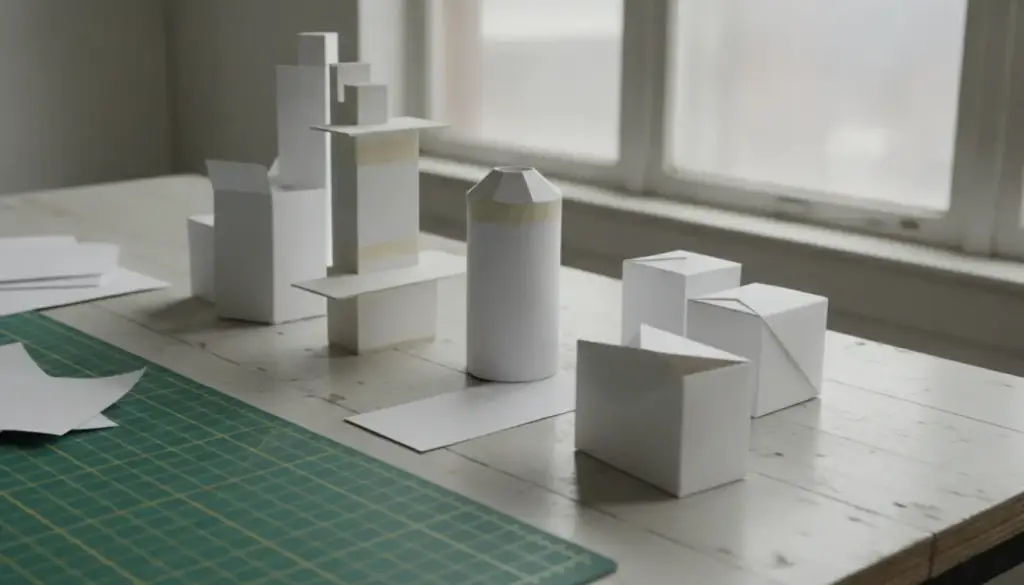
White card product maquettes and paper prototypes on a studio worktable
Generating concepts and testing them in stages
Staged, or sequenced, concept testing respects how creative work actually happens. Testing outcomes spawn new ideas, so we build that into the process. Concepts address both tangible attribute clusters and emotional appeals, because a business buyer weighs performance and risk at the same time, and a statement that covers only one half tends to test flat.
From the first round of Kinetic Depth Interviews, the work moves to larger-sample, time-extended depth interviews, often run online, which allow repeated respondent interaction and give concepts time to incubate. Online forums, actively moderated over several days, can bring executives and other hard-to-reach buyers into the same process. A hybrid design then blends the qualitative mode with quantitative concept ranking to refine the concepts and gauge their appeal. Our approach to screening favors smaller samples across multiple waves rather than one large sample wave, because each wave informs the next version of the concept.
Concept appeal also has to be judged with maximum realism. This is a case where online surveys have a strong advantage, since they can show a variety of exhibits for product concepts, advertising concepts, brand concepts and strategic positioning concepts. Power Decisions applied this thinking when a major consumer packaged goods food products company, with roots in food service and substantial inroads into retail branded products, asked for help finding new product and new market opportunities. We guided it through a new product concept idea generation process.
Chapter 03
Dropping weak concepts early and refining the strong ones
Staged testing is built to let weak concepts fail cheaply. A concept that buyers cannot restate in their own words, or that solves a problem they do not rank highly, usually shows it in the first conversations, long before tooling, inventory or a launch campaign is paid for. The concepts that survive are rewritten with the wording buyers used, tested again, and sharpened until the differences between them are clear enough to choose from.
What you receive is an executive brief that names the strongest concepts, the buyers who responded to each, the reasons given in their own words, and what to change before the next step. Where a concept needs a price, a name or a place in the market, the same study can feed B2B pricing research, brand naming and B2B positioning, using the same respondents and the same vocabulary.
If a product or service idea is on your desk, or a modification you are not sure the market wants, call Thomas Brown, Senior Consultant, at 415-328-7927 or write to Tom@powerdecisions.com. He can usually offer some immediate ideas on how to stage the first round.
Power Decisions, Forest Knolls, California. Call 415-328-7927.